
Plumbing leaks are one of the most common — and most expensive — home disasters. But when water starts spreading across your floor at 2 a.m., the question every homeowner asks is: will my homeowners insurance cover this?
The honest answer? It depends. Insurance companies don’t pay for every pipe leak. Whether you get a check or a denial letter comes down to one critical factor: how the damage happened.
Here’s what you need to know before you file a claim.
💧 Get a Free Quote from a Licensed Plumber Near You
The Golden Rule: Sudden and Accidental vs. Gradual Damage
Standard homeowners insurance covers plumbing damage that is sudden and accidental. It does not cover damage that happens slowly over time.
This single distinction determines about 90% of plumbing claim outcomes. Here’s how it breaks down:
| Situation | Typically Covered? |
|---|---|
| Pipe suddenly bursts or ruptures | ✅ Yes |
| Washing machine hose blows out suddenly | ✅ Yes |
| Toilet overflows and floods the bathroom | ✅ Usually yes |
| Water heater ruptures unexpectedly | ✅ Usually yes (damage, not the heater itself) |
| Slow drip under the sink for months | ❌ No |
| Corroded pipe that slowly leaked into walls | ❌ No |
| Mold caused by a long-undetected leak | ❌ Usually no |
| General pipe wear and deterioration | ❌ No |
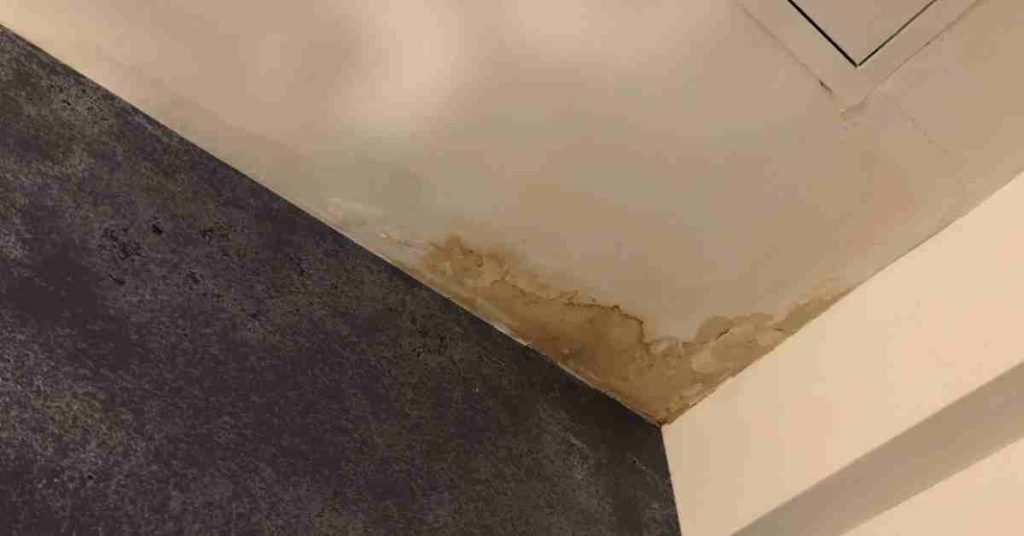
In my experience, most denied claims come from homeowners who didn’t realize there was a leak for weeks or months. The insurer investigates, finds evidence of long-term moisture damage, and classifies it as “maintenance neglect.” That’s a denial.
What Homeowners Insurance Covers for Plumbing Leaks
Most standard homeowners policies (HO-3 is the most common) include two types of coverage relevant to plumbing leaks:
Dwelling Coverage (Coverage A)
This covers the physical structure of your home — walls, floors, ceilings, and built-in systems. If a pipe bursts and ruins your hardwood floors or drywall, dwelling coverage pays for repairs after your deductible.
What it covers:
- Structural damage from a sudden pipe burst
- Water damage to walls, floors, and ceilings
- Damage from a frozen pipe that ruptures
- Accidental overflow from a bathtub or toilet
Personal Property Coverage (Coverage C)
If the plumbing leak damages your furniture, electronics, or personal belongings, Coverage C kicks in. That soaked couch, ruined rug, or water-damaged laptop may be covered.
Important limitation: The plumbing system itself — the pipe, the fixture, the valve — is almost never covered. Insurance pays for the water damage, not the plumbing repair. You’re paying a plumber out of pocket to fix the actual leak. For current plumber rates, see our guide on how much a plumber costs in 2026.
What Homeowners Insurance Does NOT Cover

Here’s where most homeowners get blindsided. Your standard policy explicitly excludes:
- Gradual leaks and seepage — Any damage that developed over time, even if you didn’t know about it
- The plumbing repair itself — The cost to fix or replace the pipe, faucet, or fixture is yours to cover
- Flooding from outside — Water that enters from ground saturation, storm surge, or overflowing rivers requires a separate flood insurance policy (NFIP or private)
- Sewer backup — Unless you’ve added a sewer backup rider to your policy, sewage that flows back up through drains is excluded. Read our full breakdown on whether homeowners insurance covers sewer line replacement.
- Maintenance issues — Rusted or corroded pipes, root intrusion, wear-and-tear damage
- Mold (usually) — Mold coverage is typically limited or excluded; some policies offer a small mold sub-limit (often $5,000–$10,000)
The most frustrating denials I’ve seen: a homeowner notices a soft spot in their floor, calls a plumber, discovers a slow leak behind the wall that’s been there for 6 months. Insurance denies it as gradual damage. The homeowner is out $8,000–$15,000 in repairs with zero reimbursement.
The lesson: Fix plumbing problems immediately. A leak you ignore becomes uninsured damage.
The Frozen Pipe Exception — What You Need to Know
Pipes that freeze and burst are covered under most policies — but with a catch. Insurance companies require you to have taken reasonable steps to prevent freezing, such as:
- Keeping your home heated to at least 55°F while away
- Shutting off and draining pipes to unoccupied areas
- Insulating pipes in unheated spaces (attic, crawl space, garage)
If you left for a two-week vacation in January, turned the heat off completely, and came home to burst pipes — your insurer may deny the claim for failure to maintain the property. I’ve seen this happen. Don’t risk it.
Does Insurance Cover Plumbing Leaks Behind Walls?
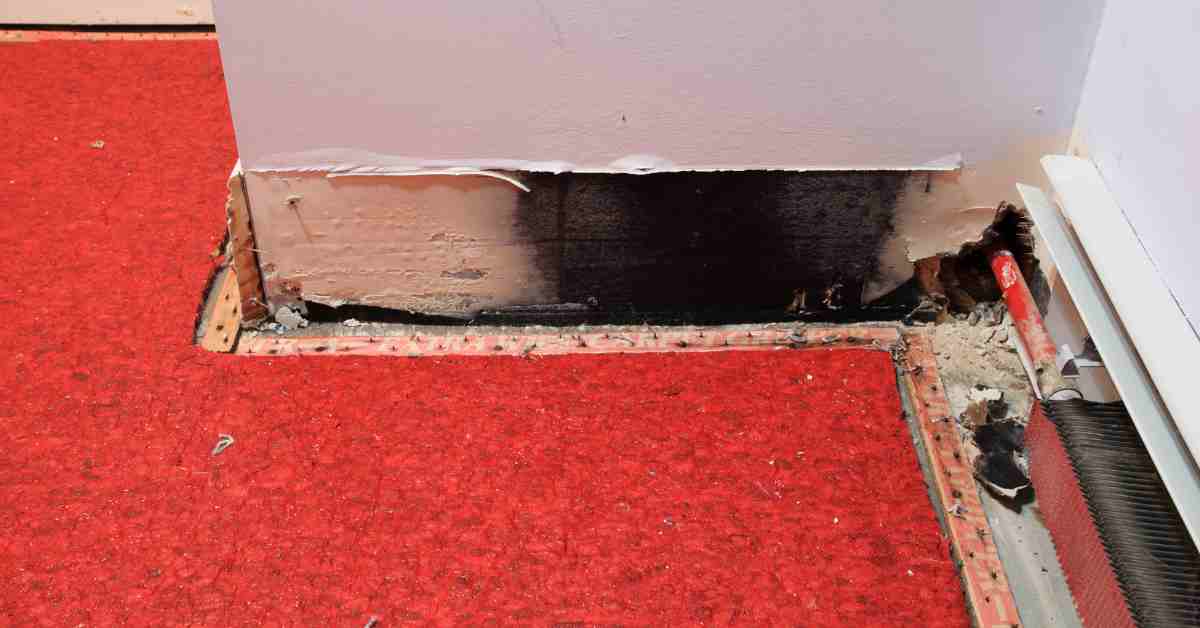
Yes, if the leak was sudden and you didn’t know about it. This is called a “hidden” or “concealed” leak. Most HO-3 policies cover the resulting damage from a sudden concealed leak, including the cost to access the pipe (cutting open drywall, for example).
However, you may need to prove:
- The leak was not pre-existing or long-standing
- You took reasonable steps to address it once discovered
- The damage wasn’t visible and obvious before it worsened
An independent plumber’s report documenting the leak as sudden can be valuable evidence when filing a claim. For context on what repairs cost before filing, check our water line repair vs. replacement guide.
How to File a Homeowners Insurance Claim for a Plumbing Leak
If you have a legitimate sudden-damage claim, here’s how to maximize your payout:
- Stop the water immediately. Shut off the water supply to the affected fixture or the main shutoff valve. Failing to mitigate damage can reduce or void your claim.
- Document everything before cleanup. Take photos and video of all damage — the leak source, water spread, affected materials, and damaged belongings. Do this before you move anything.
- Call your insurance company promptly. Most policies require you to report damage “as soon as reasonably possible.” Delays can complicate claims.
- Get a plumber out immediately. You need to fix the leak, but keep all receipts. Your policy may reimburse “reasonable” emergency plumbing costs. Here’s what to expect on emergency plumber costs in 2026.
- Document the cause clearly. Ask your plumber to note in writing that the damage was sudden and not pre-existing. This documentation matters if your claim is disputed.
- Get a public adjuster if the claim is large. For claims over $10,000, a public adjuster (who works for you, not the insurer) can often increase your payout by 20–40%.
Should You Add Water Backup Coverage?
Standard policies exclude sewer and drain backup. This rider costs roughly $50–$250 per year and covers sewage or water that backs up through drains, toilets, or sumps. If you have a basement or live in an older home with aging sewer lines, it’s worth every penny.
Similarly, if you’re in a flood-prone area, flood insurance through the NFIP averages about $700–$900 per year and covers what your homeowners policy never will — rising water from outside your home. See our full post on homeowners insurance and water line replacement for more on coverage riders worth having.
Quick FAQ: Homeowners Insurance and Plumbing Leaks
Does homeowners insurance cover a leaking pipe under the slab?
Yes, if the slab leak is sudden and unexpected. Slab leak repair is expensive ($2,000–$10,000+), and most policies cover the resulting damage. The repair itself (excavation, re-piping) may be partially covered under “cost to access” provisions.
Will insurance cover a leaking roof causing water damage inside?
Yes — if the roof was undamaged and a sudden storm caused water intrusion. If the roof was already deteriorating, the claim may be denied for lack of maintenance.
Does insurance cover water damage from a neighbor’s leak?
In a condo or attached home scenario, your policy covers your unit’s damage. You would then subrogation-claim against your neighbor’s liability coverage.
What’s the average payout for a plumbing leak claim?
According to industry data, water damage claims average $12,514. Major pipe burst events that damage floors, walls, and contents can exceed $30,000–$50,000.
Will filing a plumbing claim raise my insurance rates?
Possibly. A single water damage claim can increase premiums 10–20% and can affect your renewal. For minor leaks under $5,000, it may be smarter to pay out-of-pocket than to risk a rate increase or non-renewal.
Bottom Line: Know Before You File
Homeowners insurance does cover sudden plumbing leaks — burst pipes, unexpected overflows, sudden water damage. It does not cover gradual leaks, maintenance neglect, the plumbing repair itself, or flood water from outside your home.
The single best thing you can do: fix plumbing problems the moment you notice them. That slow drip under your sink is either a small repair today or an uninsured mold problem in six months.
If you’re dealing with a plumbing emergency right now, don’t wait. Get a free quote from a licensed plumber in your area and find out what it’ll cost to fix before the damage gets worse.
💧 Get Free Quotes from Licensed Plumbers Near You