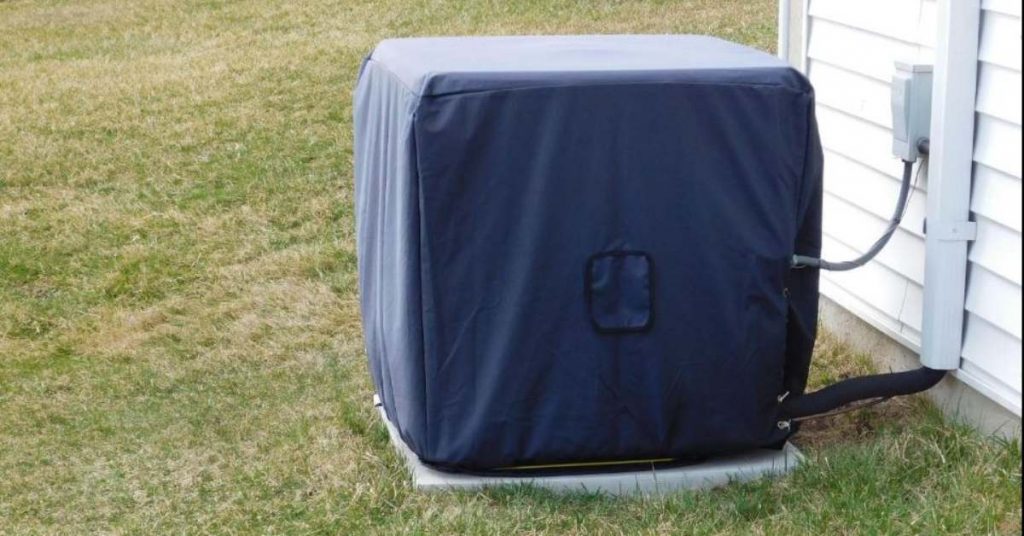
When cold weather hits, many homeowners wonder whether they should cover their air conditioner during the winter months. While AC covers are made to protect your outdoor condenser from snow, ice, and debris, not everyone agrees on their necessity. The right decision often depends on your local climate, the type of unit you have, and personal preference.
Pros of using AC covers in winter:
- Weather Protection: A well-fitted cover can shield your AC unit from snow, ice buildup, and harsh winds—helping prevent rust or damage and potentially extending the unit’s lifespan.
- Keep Debris Out: Covers help block leaves, branches, and other debris from clogging the unit while it’s not in use, making spring startup easier.
- Improved Curb Appeal: For units placed in visible spots like patios or side yards, a cover can keep the area looking tidy during the off-season.
Cons of using AC covers in winter: While AC covers offer some benefits, they also come with a few drawbacks. For some homeowners—especially those in milder climates—covering the unit may do more harm than good.
- Trapped Moisture: If moisture sneaks in or the cover isn’t ventilated properly, it can lead to condensation inside the unit. That trapped moisture can cause rust, corrosion, or even mold.
- Inconvenience: Covers can be a hassle to remove—especially if there’s an unexpected warm day and you need to turn on the AC for a quick cool-down.
- Not Always Necessary: In areas with mild winters and little snow, covering your unit may not offer much added protection and could be more trouble than it’s worth.
Smart Alternatives to AC covers in winter:
- Winterizing Your AC: Instead of using a cover, follow a simple winterizing checklist—turn off power to the unit, clean around it, and clear away debris to keep it in top shape.
- Install a Cage or Shelter: A vented enclosure can block falling branches or snow without trapping moisture inside.
- Book a Professional Maintenance: A quick inspection from an HVAC pro before winter hits can catch small issues early and ensure your unit is ready for hibernation.
- DIY Weatherproofing: Use weatherproof foam or mesh to block gaps in the unit’s casing—this helps keep moisture and critters out while still allowing for airflow.
- Seasonal Power Control: Cutting power to the unit for the season helps prevent it from running accidentally and saves energy.
Can Winter Damage Your Outdoor AC Unit?

Don’t you think that if winter can damage an AC unit then manufacturers would find a way to prevent that from happening? As a matter of fact, AC manufacturers do not recommend the use of AC covers.
Could it be that the manufacturers don’t want the ACs to last for so long otherwise they would be out of business? Can that explain why they don’t include an AC cover when you buy the AC unit?
But what would really happen when the AC condenser unit is exposed to extreme winter weather? And how is an AC cover supposed to prevent that from happening.
The theory behind AC covers is that they prevent snow from penetrating the unit and sitting in the coils. Due to the lower temperatures, the snow will expand and damage the coils fins. Damaged fins restrict the flow of air to the condenser coil.
That however rarely happens. Air conditioner are made to withstand the harshest of winters. What you need to be careful about is falling icicles and blizzards. In such cases, an AC cover would make sense.
Why AC Covers are a Bad Idea?
The following are some of the reasons why you shouldn’t use an AC cover:
1. Risk of Corrosion
If you check online or in physical stores, you will notice that the majority of AC covers being sold are waterproof (meaning they are made of plastic) and will therefore not allow any water inside the unit.
While that is a good thing, most folks forget that if water cannot get in, it also means that water cannot get out. The thing with the air around us is that it will always contain some moisture in it. Also, the cover cannot totally prevent moisture from getting inside the unit.
The moisture will then get trapped inside the unit and because oxygen is always present, the different components of the AC will start to corrode. I have actually seen a scenario where the AC capacitors and wires were so corroded that the AC wouldn’t start.
2. Mold Problem
For mold to grow, it needs moisture, temperatures just above 40 degrees and a substrate. Having an AC cover helps to trap in the moisture needed by the mold to start growing.
Although winter temperatures are not ideal for mold growth, mold spores enter the unit during that time and start growing when temperature starts to increase.
The warmth created by the cover is the reason why mold can develop inside the AC unit even when temperatures outside are low.
3. Doesn’t Keep Rodents Away
Rodents like rats can get inside the condenser unit and chew up cables and cause a whole lot of other problems. But AC covers will keep them away and protect your AC components; right? Wrong!
When the outside temperatures are at their lowest, AC covers create a warm environment inside the condenser unit where rats and other animals are happy to call home. They will just chew up the cover and hide inside for as long as it takes and damage whatever they can.
4. The Condenser will Always Need Cleaning
It is not easy for debris to enter the condenser unit and clog up the fins when the unit is not being used. Most folks don’t know that.
When the AC is running, the condenser fan pulls air from the surrounding to cool down the refrigerant. As the air is being pulled in, light trash in the surrounding is also sucked in which end up clogging the coil fins.
Don’t therefore think that because you have an AC cover you will not need to clean your condenser. A condenser should be cleaned regularly otherwise there will be no cold air being blown in your house.
Note: You can’t use AC covers when the AC is running. The cover will restrict the flow of air to the coil, forcing the unit to work harder than it should. When that happens, the AC motors components the compressor fan can overheat and burn out.
What Type of AC Covers Should You Use
If you must use an AC cover, I suggest you think about a breathable cover. This type of cover will not trap moisture inside the condenser unit hence no issues with corrosion or mold infestation.
A breathable cover will also not motivate rodents to seek shelter inside the unit but importantly it will trap leaves, seeds and other debris especially during fall season.
Another option is to make or buy an air conditioner cover that covers only the top part of the condenser unit. Such a cover will not only prevents debris from falling inside the unit but will also trap snow.
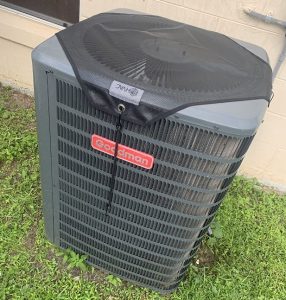
An easy method/way to come up with an AC cover is to place a large piece of plywood on the condenser unit (big enough to cover the entire length and width of the unit) and then secure it by placing blocks at the top.
When is an AC Cover Necessary?
Although I have said that you almost always don’t need an AC covers, in some cases it actually makes sense to have the AC covered (partially not wholly though). The following are some of those instances:
1. During Fall
As I am sure you already, there will be lots of leaving dropping during fall season. Some of those leaves or nuts and seeds will fall directly on the top grille of the AC unit or even be blown there by wind.
As you can imagine, the debris will hold moisture, which increases the rate of corrosion of the AC units. The debris can also end up clogging the unit’s drainage, meaning that the unit cannot drain water even in the case of rain.
2. Dropping Icicles and Blizzards
Blizzards are basically snowstorms which come with strong and sustained winds. These can badly damage your outside AC unit especially the coil fins. If your area is experiencing a blizzard, covering the AC will protect it from damage.
Dropping icicles can badly damage your outside AC unit if it is too close to the house or gutters. Normal AC covers cannot protect the unit from the impact created by the icicles and you would therefore need to improvise on a type of shelter that absorbs the shock before it lands on top of the unit where it can even damage the fan.
Wrap Up
And basically that is everything that needs to be said about AC covers. You really don’t need an AC cover, but if you must use one, make sure that it is a breathable one or one that covers only the top part of the unit.
Full-size waterproof AC covers will do your AC more harm than good. The AC components are more likely to corrode, mold will grow inside the unit or they will leave you with a rodent infestation.