


You’ve done your research. You know a tankless water heater is the right move. Now you’ve narrowed it to two names that keep coming up: Rinnai and Navien. Good news, both are genuinely excellent brands. The real question is which one fits your home, your budget, and your priorities.
Short answer: Navien edges ahead on features and innovation — built-in recirculation, buffer tank, and smarter controls. Rinnai wins on raw flow rate, installer trust, and long-term serviceability. Depending on your situation, the right pick is different. Here’s the breakdown.
Rinnai vs. Navien: Quick Comparison
| Feature | Rinnai (RUR199iN) | Navien (NPE-240A2) |
|---|---|---|
| Max flow rate | 11.0 GPM | 11.2 GPM |
| UEF efficiency | 0.96 | 0.96 |
| Built-in recirculation | No (Sensei has it) | Yes (all NPE-A2) |
| Buffer tank included | No (Sensei only) | Yes (ComfortFlow) |
| Heat exchanger warranty | 12 years | 15 years |
| Unit price (approx.) | $1,100–$1,400 | $1,400–$1,700 |
| Installer preference | Very high | High |
| Best for | Cold climates, high flow needs | Comfort, smart features, quiet operation |
Rinnai Tankless Water Heaters: What You Need to Know
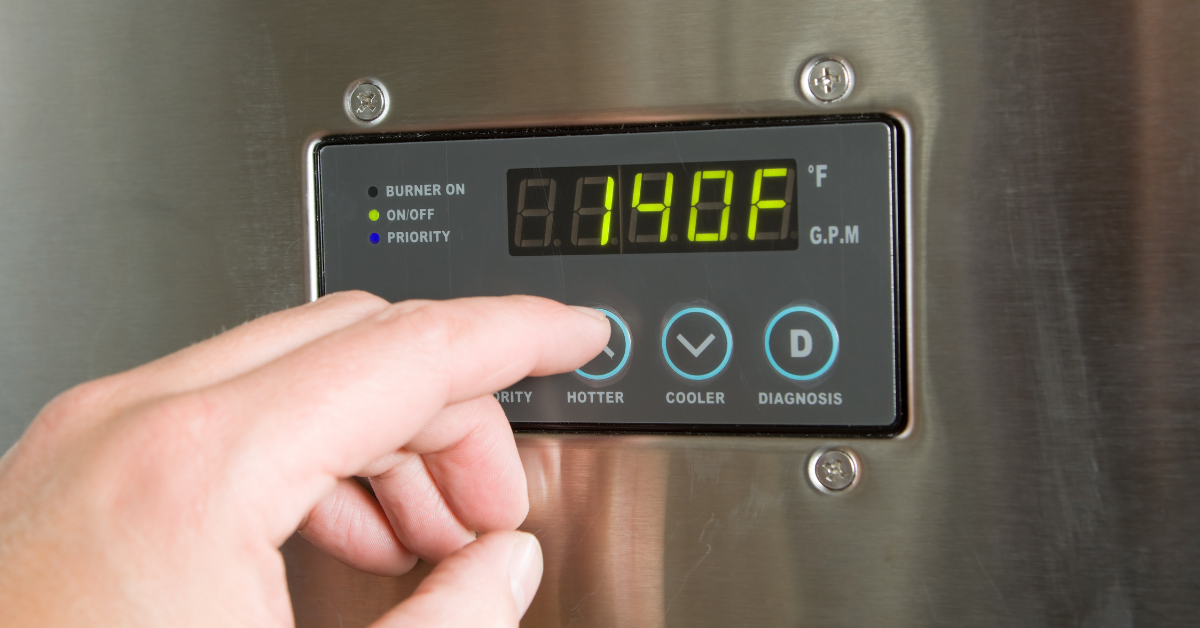
Rinnai has been manufacturing tankless water heaters for over 80 years. That’s not a marketing line. That’s genuine engineering experience baked into every unit they produce. In North America, Rinnai is the brand professional plumbers reach for first when reliability matters most.
The lineup runs three tiers:
- Rinnai V-Series (Value): Non-condensing, 0.82 UEF, 6.5–9.5 GPM. Entry-level pricing at $700–$1,000. Solid for mild climates and smaller households. No frills, no problems.
- Rinnai RU Series (Condensing): 0.95–0.96 UEF, 7.5–11.0 GPM. The workhorse. Most widely installed by professional plumbers across the country. This is the series most homeowners should look at.
- Rinnai Sensei Series: Top tier. Condensing with a built-in 2-gallon buffer tank and Smart-Circ recirculation. 0.96 UEF, up to 9.4 GPM. Eliminates the cold-water sandwich effect. Premium pricing at $1,500–$1,900.
Where Rinnai wins: Flow rate at cold temperature rises, installer familiarity, parts availability in smaller markets, and a 12-year heat exchanger warranty on premium models. At a 67°F temperature rise (standard winter scenario for northern states), Rinnai’s RUR199 delivers 5.8 GPM. Navien’s NPE-210A2 delivers 5.1 GPM. That difference matters in Minnesota. It’s meaningless in Florida.
One honest note: Rinnai’s base RU Series doesn’t include recirculation. You’ll need a separate pump (add $300–$600) for instant hot water. The Sensei solves this but adds cost. Before deciding, read our full breakdown on whether a tankless water heater is worth the upgrade for your specific situation.
Navien Tankless Water Heaters: What You Need to Know
Navien launched in North America in 2009 and quickly built a reputation for solving problems that traditional tankless units always had. Their engineering focus is comfort and efficiency, not just raw output.
The main lines:
- Navien NPE-A2 Series: The flagship. 0.96 UEF, up to 11.2 GPM. Built-in recirculation pump. ComfortFlow buffer tank included. EZNav multi-line display. Wi-Fi ready. Price: $1,200–$1,800 depending on size.
- Navien NPE-S2 Series: Mid-range. 0.95 UEF, similar GPM ratings. No built-in recirculation. Lower price point. Good entry into condensing Navien.
- Navien NPN Series: Non-condensing entry line. Lower efficiency (0.82 UEF), lower upfront cost. Direct competitor to Rinnai’s V-Series.
Where Navien wins: The ComfortFlow system is genuinely clever. It combines a buffer tank and recirculation pump into the unit itself, eliminating cold-water sandwich entirely without external add-ons. Navien units are also noticeably quieter — something that matters if the water heater sits near a bedroom or open-plan living space. The 15-year heat exchanger warranty on NPE-A2 models beats Rinnai’s 12-year coverage.
The honest tradeoff: Navien’s complexity is a double-edged sword. More features means more components, and in markets where Navien-certified technicians are scarce, service calls take longer. I’ve seen rural homeowners wait days for a Navien service tech that a Rinnai owner could’ve had fixed same-day. Know your local service network before committing.

Head-to-Head: The Categories That Actually Matter
Flow Rate at Real-World Temperatures
On paper, both brands hit impressive GPM numbers. In practice, cold inlet water reduces effective flow significantly. Here’s the real-world comparison at a 67°F rise (cold climate scenario):
| Model | Max GPM (rated) | GPM at 67°F rise | BTU Input |
|---|---|---|---|
| Rinnai RUR199iN | 11.0 GPM | 5.8 GPM | 199,000 BTU |
| Navien NPE-240A2 | 11.2 GPM | 5.1 GPM | 199,900 BTU |
| Rinnai RU180iN | 9.4 GPM | 4.9 GPM | 180,000 BTU |
| Navien NPE-180A2 | 8.4 GPM | 4.4 GPM | 180,000 BTU |
Rinnai maintains a consistent edge at higher temperature rises. For a family of four in a cold climate running two simultaneous hot water sources, that extra 0.7 GPM is real. In warmer climates, both units perform essentially identically.
Efficiency and Tax Credit Eligibility
Both Rinnai RU Series and Navien NPE-A2 Series hit 0.96 UEF on their condensing models. That puts them in qualifying territory for the federal 30% energy efficiency tax credit, up to $2,000 on qualifying installations. For gas tankless, the minimum threshold is 0.95 UEF — both brands clear it on premium models.
Bottom line on efficiency: it’s a tie at the top tiers. Both brands offer the same maximum 0.96 UEF rating, and both qualify for the same federal incentives. This is not a differentiator between the two brands.
Total Cost: Unit Plus Installation
Navien’s NPE-A2 runs $100–$400 more expensive than an equivalent Rinnai RU unit. That premium pays for the built-in recirculation and buffer tank. If your Rinnai installation requires adding a separate recirculation system (plan for $300–$500), the total cost gap narrows considerably.
| Scenario | Rinnai Total | Navien Total |
|---|---|---|
| Unit only (comparable size) | $1,100–$1,400 | $1,400–$1,700 |
| With professional installation | $1,600–$2,400 | $1,900–$2,700 |
| With recirculation pump added | $1,900–$2,900 | Included above |
For detailed installation costs in your state, regional labor rates vary significantly. California and Northeast markets run 30–45% above national averages. Budget accordingly.
Warranty Coverage
This is where Navien pulls ahead, clearly:
| Warranty Category | Rinnai (RU/Sensei) | Navien (NPE-A2) |
|---|---|---|
| Heat exchanger | 12 years | 15 years |
| Parts | 5 years | 5 years |
| Labor (1st year) | 1 year | 1 year |
Navien’s 15-year heat exchanger warranty is the longest available from a major tankless brand. Heat exchangers are the most expensive component in any tankless unit — a warranty claim on one can save you $800–$1,200 in repair costs. That coverage is worth real money over the life of the unit.
Best Models to Buy in 2026
Best for Most Homeowners: Navien NPE-240A2
For a family of 3–5 in a typical American home, the Navien NPE-240A2 is the strongest all-around choice. Built-in recirculation means instant hot water to every tap. The ComfortFlow buffer tank eliminates the cold-water sandwich. Wi-Fi monitoring via the NaviLink app is useful. And the 15-year heat exchanger warranty is the best in the industry. Street price: $1,400–$1,700 before installation.
Best for Cold Climates: Rinnai RUR199iN
If you’re in Minnesota, Wisconsin, upstate New York, or anywhere with cold winter groundwater, the Rinnai RUR199iN delivers the highest effective flow rate at temperature extremes. At 5.8 GPM at a 67°F rise, it outperforms every comparably-priced competitor. Add a separate recirculation pump and you match most of what Navien offers at the base level. Street price: $1,100–$1,400 before installation.
Best Value Condensing Unit: Rinnai RU180iN
For a 3–4 person household that doesn’t need the maximum flow rate, the Rinnai RU180iN hits 0.96 UEF at a lower price point. Reliable, widely serviced, and qualifies for federal efficiency tax credits. The smart entry point into premium condensing performance without paying for capacity you don’t need.
Which Brand Should You Buy?
Here’s the honest framework:
Choose Navien NPE-A2 if:
- You want built-in recirculation and instant hot water without add-on equipment
- Noise level matters (near living spaces or bedrooms)
- You value the 15-year heat exchanger warranty
- Your market has experienced Navien service technicians
Choose Rinnai RU Series if:
- You’re in a cold climate where flow rate at temperature rise matters
- Your local plumbers primarily install and service Rinnai
- You want the most installer-trusted brand with the easiest parts sourcing
- You’re budget-conscious and willing to add recirculation separately if needed
Neither brand is a wrong choice. Both qualify for the same federal tax credits. Both come with excellent warranties. Both are installed by professional plumbers nationwide. The differences are real, but they’re margin differences — not a clear winner for everyone in every market.
If you want a pro to weigh in on which brand fits your specific home and local service network, get a free quote from a licensed plumber in your area. They’ll tell you which unit they service regularly — and that’s the most important factor in long-term satisfaction.
For context on how these top brands compare to value-tier competitors, see our Rheem vs. AO Smith water heater breakdown for how the mid-market shakes out.
Frequently Asked Questions
Is Rinnai or Navien more reliable?
Both brands have strong reliability records. Rinnai has a longer North American track record and is the more commonly installed brand, meaning more service technicians are familiar with it. Navien has made significant reliability improvements since its early North American launch. In markets with strong Navien service networks, reliability is comparable. Rinnai has a slight edge in rural or smaller markets where technician availability matters.
What is the cold-water sandwich effect?
The cold-water sandwich happens when a small burst of hot water is followed by a brief pulse of cold water, then hot again. It occurs because residual hot water in the pipes is followed by unheated water, then the newly heated flow. Navien’s ComfortFlow buffer tank solves this by pre-storing a small amount of hot water. Rinnai’s Sensei series also addresses it with a built-in buffer. Standard Rinnai RU models require a separate recirculation system to eliminate it.
Do Rinnai and Navien qualify for the 2026 federal gas tankless tax credit?
Yes. Both brands’ condensing models at 0.95 UEF or higher qualify for the federal Energy Efficient Home Improvement Credit. The credit covers 30% of project costs, capped at $600 for qualifying gas tankless units. Confirm the specific model meets the UEF threshold before purchasing. The four-digit QM code from the manufacturer is required for 2026 tax claims.
How long do Rinnai and Navien tankless water heaters last?
With proper maintenance, both brands typically last 20 years or more. Annual descaling (especially in hard water areas) and regular filter cleaning are the key maintenance tasks. Rinnai’s 12-year heat exchanger warranty and Navien’s 15-year coverage both reflect the long expected lifespan of these units. Traditional tank water heaters average 10–15 years for comparison.
What size Rinnai or Navien do I need?
For 1–2 people: an 8 GPM unit (Rinnai RU130 or Navien NPE-150A2) is typically sufficient. For 3–4 people: 9–10 GPM (Rinnai RU180iN or Navien NPE-180A2). For 5+ people or homes with high simultaneous demand: go to the top tier (Rinnai RUR199iN or Navien NPE-240A2). In cold climates, size up one category from the recommendation above.
How much does it cost to install a Rinnai or Navien?
Installation typically adds $500–$1,500 on top of the unit cost, depending on complexity. Converting from tank to tankless, adding a gas line, or upgrading venting can push total installed costs to $3,000–$5,000. For a detailed breakdown, see our guide on water heater installation costs by state — labor rates vary by as much as 45% depending on where you live.
Rinnai and Navien are the two best tankless water heater brands in North America. You’re not making a mistake with either one. For cold climates and installer simplicity, go Rinnai RUR199iN. For built-in comfort features and the longest warranty in the business, go Navien NPE-240A2.
Ready to move forward? Get a free quote from a licensed plumber in your area. You’ve got this.

